
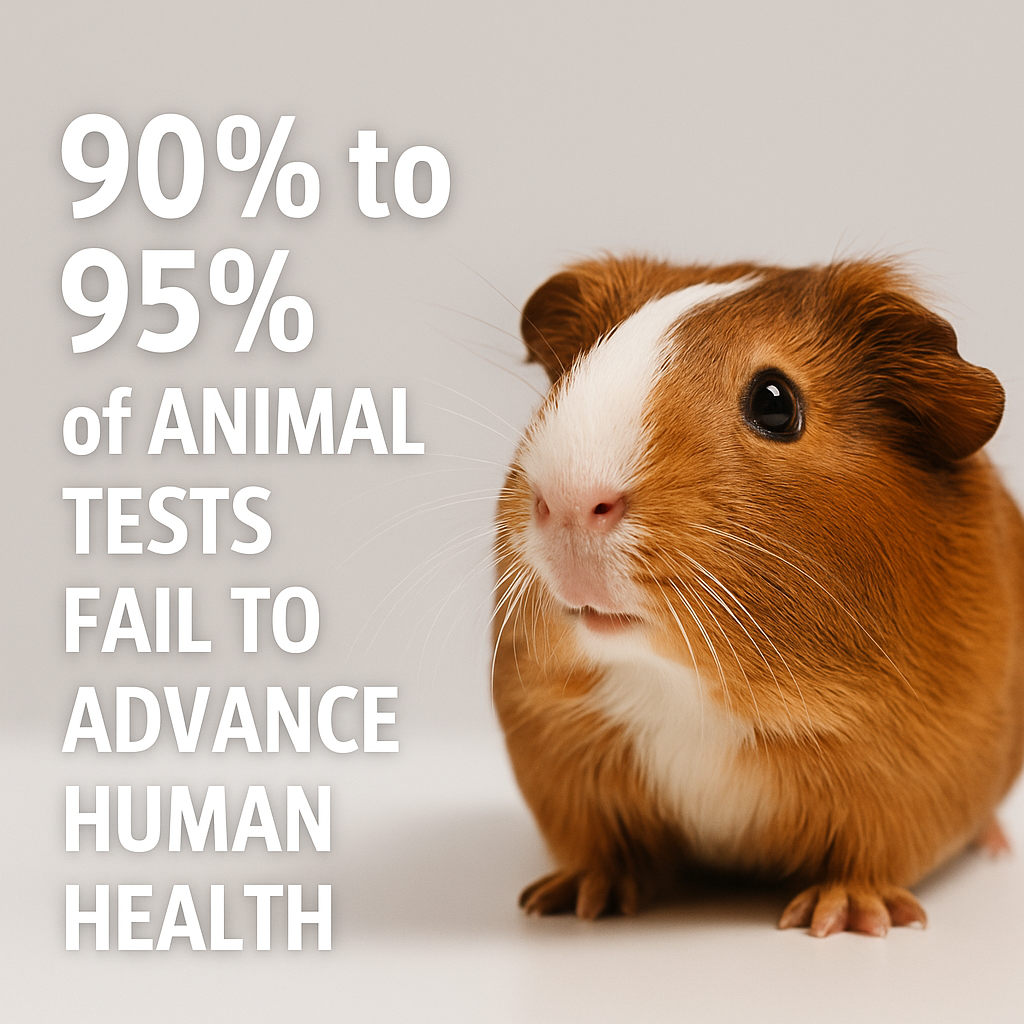
A personal reflection on working in cancer research, the ethical line I couldn’t cross, and why I’ve always believed in human-based science.
Why I Chose Human-Based Science
I began my career in cancer research working with human osteosarcoma cell lines, testing experimental compounds designed to interrupt cell division and arrest cells in mitosis. It was careful, methodical work with many hours spent maintaining cultures, analysing results, and trying to understand how cancer behaves at a cellular level. It felt purposeful, and importantly to me, it was rooted in human biology.
Downstairs, most of the research looked very different. That was where the animal work happened. Mice were the primary models, used to grow tumours, test treatments, and generate data. I knew it was happening but I never went down there because of my discomfort about using animals as models as I saw them as sentient beings.
At the time, a colleague I often car-shared with worked directly on those studies. They would describe the process in a matter-of-fact, scientific way: tumours deliberately induced, animals monitored as the disease progressed, then euthanised so tissues could be removed, sliced, stained and examined under a microscope. This was standard practice. Routine. Necessary, I was told. But I couldn’t reconcile it.
For me, the idea of deliberately causing suffering to an animal, one that cannot understand or consent, never sat comfortably, no matter how it was framed. I understood the intention behind it. I understood the goal. But understanding something is not the same as accepting it. So I stayed where I felt I could contribute without crossing that line.
A Different Path Within Science
My work remained focused on human-based systems. Cell lines, later broader laboratory work including haematology and blood transfusion, areas directly connected to patient care and human biology. It reinforced something I had felt from the beginning: that science does not have to rely on harming animals to make progress. There are other ways.
Even early in my career, I was drawn to the potential of stem cell research. The idea that we could grow human tissues, study disease in systems that actually reflect human biology, and develop treatments based on that understanding, it made sense to me scientifically, not just ethically. That belief has only strengthened over time.
Stem cells, organoids, and other human-based models offer something fundamentally different: they allow us to study disease in the context that matters most, human biology itself. They are not perfect, and no model ever is, but they represent a direction of travel that feels both more precise and more responsible.
A Personal View on Ethics and Potential
I know that some areas of research, particularly embryonic stem cell work, raise complex ethical questions. For me, the balance has always come down to potential and harm.
Embryonic stem cells have an extraordinary capacity to advance medicine, to help us understand disease, develop treatments, and potentially transform outcomes for patients. My personal view is that this potential matters. When weighed against practices that involve the deliberate suffering of sentient animals, it feels like a direction worth supporting.
Others may see it differently, and that’s okay. But I think these are conversations we should be having openly, rather than defaulting to what has always been done.
Looking Back and Forward
Looking back, I realise I made a quiet choice early in my career. I didn’t stand on a platform or argue about it, I simply chose to work in a way that aligned with my values. At the time, that felt like a personal decision. Now, it feels like part of a much broader shift.
Science is evolving. Human-based methods are advancing rapidly, offering new ways to study disease, test treatments and understand biology without relying on animal models. What once felt like an alternative is increasingly becoming the future.
For me, that future is not just about compassion, though that matters, it’s about doing science in a way that is more directly relevant, more precise, and ultimately more aligned with the people it is meant to help. If our goal is to understand and treat human disease, then it makes sense to start with human biology.
Final thought
I didn’t choose this path because it was easy, or because it was expected. I chose it because it felt right and thankfully, now, it also feels like this is where science is heading.